Archetypes are universal patterns inherited in the structure of the psyche — the Shadow, the Self, the Persona, the Anima and Animus, and many others. They appear in dreams, in myth, and in the recurring forms of our living.





Archetypes are universal patterns inherited in the structure of the psyche — the Shadow, the Self, the Persona, the Anima and Animus, and many others. They appear in dreams, in myth, and in the recurring forms of our living.
The light we carry in the darkness of the unconscious
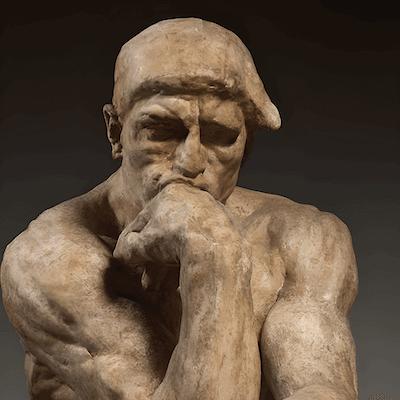
Jung sometimes uses the metaphor of a light in the darkness to describe what he means by ego. Imagine walking in a forest at night — totally dark. Then you light a match, then a candle. Now you can see a few things around you. The ego is like that: a light in the darkness of the unconscious psyche. Without an ego, we couldn't keep memories, feelings, or thoughts in place. They would disappear as soon as they became manifest.
The ego lights things up and allows you to see them more clearly. If you have a strong flashlight, you can see further into the darkness of the forest around you — you can differentiate your surroundings and orient yourself. A strong ego lets you see deeper into the inner world and the hidden aspects of the outer world.
The most common abuse of the ego is for it to exaggerate its own separateness and engulf all other aspects of the Self. This leads to a rigid, distorted and materialistic outlook at the expense of what is equally real — namely, the potential and spiritual realms. This onesidedness can be compensated by making as much room as possible for dreams or any manifestation of the unconscious.
"The sacrifice of the ego is required, for the ego is full of delusions and limitations, unable to see beyond its own standpoint to the reality of the Other."
— M. Stein
The mask worn outward — and the self hidden behind it
The term derives from the Latin word for the mask worn by actors in classical times. The persona refers to the mask or face a person puts on to confront the world — it can refer to gender identity, a stage of development, a social status, a job or profession. Over a lifetime, many personas will be worn and several may be combined at any one moment.
Jung's conception of the persona is of an archetype — there is an inevitability and ubiquity to persona. In any society, a means of facilitating relationship and exchange is required. The risk of pathology lies in identifying too closely with one's persona. This implies a lack of awareness of much beyond social role, and a failure to take account of maturation. Persona identification leads to a form of psychological rigidity; the unconscious will tend to erupt rather than emerge in a manageable way.
Jung assigned to the persona the role of mediator between the ego and the external world — in much the same way as the Anima and Animus mediate between the ego and the internal world. Persona and Anima/Animus can therefore be thought of as opposites.
"The persona is the cloak and the shell, the armor and the uniform, behind which and within which the individual conceals himself — from himself, often enough, as well as from the world."
— A. Samuels

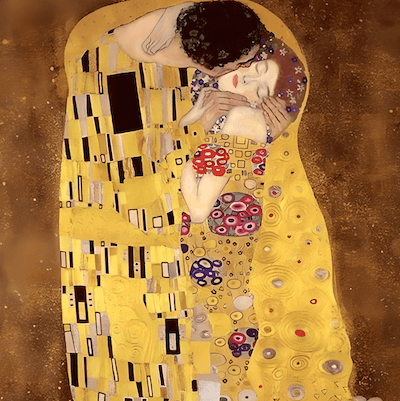
The bridge between the ego and the depths — wearing a human face
Buried within the unconscious lies a figure that holds the neglected sides of our masculinity or femininity. A man who goes through life embodying mostly masculine qualities remains unaware of an undeveloped and unconscious feminine figure in his psyche — what Jung called the anima. It is through the anima that a man is able to connect with his softer, more soulful and perhaps more creative side.
Women had the opposite development. An unconscious masculine figure typically lived hidden away — a personality with strength and determination and warrior-like power that Jung called the animus. In dreams, this figure often comes to women as a powerful male figure. In the second half of a woman's life, she might distance herself from an overly nurturing role and develop a stronger, more forceful public personality. At such times, her animus is surfacing.
This paradigm has shifted dramatically over the last few decades as gender became more fluid. Nonetheless, whatever gender elements we incline toward, the opposite gender develops unconscious power within our anima/animus. Connecting to those opposite gender traits allows us to become more whole and complete.
"It is through the anima that a man is able to connect with his softer, more soulful and perhaps more creative side. She is pregnant with new life, heralding the future."
— M. Stein
The archetype of wholeness: everything the ego is not, and everything it is becoming
While the Shadow and the Anima/Animus are those parts of a dreamer's potential that have been neglected so that the main characteristics of the personality can be realized, the Self is the archetype of the future — the potential development of the individual. It is like a figure beckoning from the future, necessarily of the same sex as the dreamer, but later becoming a symbol of wholeness including all aspects of the personality, past and future, active and passive, creative and receptive.
The symbols themselves may range from the highest to the lowest. Almost anything may serve as a symbol, but it will be recognizable as referring to the inner being because of the immense significance the dreamer attaches to it. Captain Ahab's quest for the white whale is an example of the quest for the Self, albeit in its negative, destructive aspect.
When the images of this archetype start appearing in dreams, it will probably mark the beginning of the process of becoming whole — identifying with something other than our everyday selves, and also more enduring.
"The finite limited man, reaching out for the roots of his being — which are both his source and his goal — transcends the personal to embrace the whole range of nature and reality to its very depths."
— T. CHetwynd

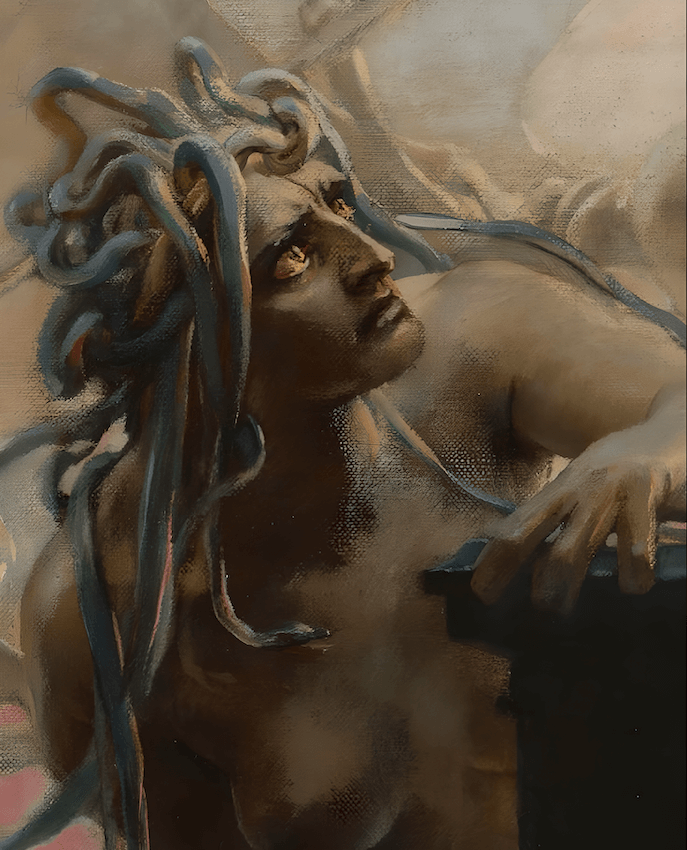
Everything the ego disowns — now living its own life behind our back
The shadow is the archetypal experience of the "other fellow" who in his strangeness is always suspect — the archetypal urge for a scapegoat, for someone to blame and attack in order to vindicate oneself. To the extent that I have to be right and good, he, she, or they become the carriers of all the evil which I fail to acknowledge within myself.
Everybody has an individual Shadow, and it is nearly always the worst side of himself that he has failed to recognise. The sensitive altruist will have a brutal egotistic Shadow; the courageous individual will have a cowardly Shadow; the ever-loving person will have a bitter cantankerous Shadow. Dr Jekyll had Mr Hyde, and so on.
The encounter with the Shadow is usually painful — the shock of seeing ourselves as we really are at our worst. To face it humbly is to accept ourselves, and from that to see the rest of reality as it is. It often revives normal instincts, appropriate reactions, creative impulses that have been condemned to conscious oblivion along with the evil and destructive sides of the personality.
Think of the person you detest most in the world, mix in the worst characteristics of anyone else you know, and you have a fair idea of your own Shadow.
"We spend our life until we're twenty deciding what parts of ourself to put into the bag, and we spend the rest of our lives trying to get them out again."
— R. Bly
Beyond the core structural archetypes, Jung and his successors identified many others — mythological in origin, universal in their psychic patterns, and perpetually active in our dreams, our projections, and our lives.
Primordial images of parents within
Human beings are wired for "mother" and "father" and many other human relationships, as well as all forms of the human experience of the world. And though those in the outer world may not live up to the archetypal expectation, the archetype is nonetheless present. It is constant and universal in all of us.
We, like the duckling that mistakes a cat for its mother, mistake our actual parents for the ideal patterns and potentials within us. The archetype of the mother or father is not the flesh-and-blood person who raised us — it is the primordial image of what a mother or father is, carried in the structure of the psyche itself.
"The Divine Child, modulated and enriched by life's experiences, becomes the King; the Precocious Child becomes the Magician; the Oedipal Child becomes the Lover; and the Hero becomes the Warrior."
— R. Moore & D. Gillette

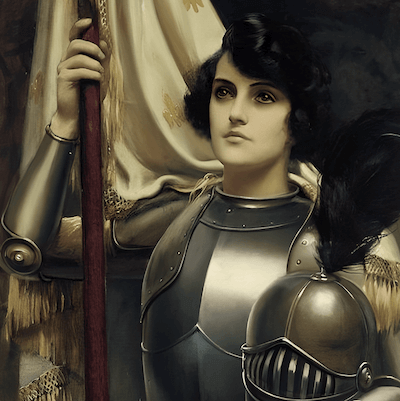
The will to seek repeated transformation in pursuit of wholeness
The hero is a mythological motif that corresponds to man's unconscious Self — a quasi-human being who symbolises the ideas, forms, and forces that mould or grip the soul. The image of the hero embodies man's most powerful aspirations and reveals the manner in which they are ideally realised.
The hero is a transitional being, a Mana Personality. Viewed intrapsychically, he represents the will and capacity to seek and undergo repeated transformations in pursuit of Wholeness or Meaning. The wholeness of a hero implies not only the ability to withstand but also to hold consciously the tremendous tension of opposites.
Jung was at pains to point out dangers. A figure of such magnitude cannot be incorporated in its fullness but requires careful analytic delineation. It is the earnest pursuit of the hero image — when the destination is given precedence over the journey — that leads to over-intellectualization and an artificially conscious striving for goals only realisable gradually and by way of dialogue with one's own unconscious.
"Hero is the Ego-Self Axis personified — at times he appears to be Ego; at other times, Self."
— A. Samuels
The man who never grows up — youth, freedom, and avoidance
Puer aeternus is the name of a god of antiquity. The words come from Ovid's Metamorphoses, applied to the child-god in the Eleusinian mysteries — a god of vegetation and resurrection, of divine youth, corresponding to such oriental gods as Tammuz, Attis and Adonis. Puer aeternus means "eternal youth."
The man identified with the archetype of the puer aeternus remains too long in adolescent psychology — all those characteristics normal in a youth of seventeen or eighteen are continued into later life, coupled in most cases with too great a dependence on the mother. He is full of talents and potentialities, all promises and no fulfilment. In order to make a real accomplishment he must sacrifice a number of other potentialities.
In Don Juanism there is another typical form of this disturbance. The image of the perfect woman is sought in every woman. Once he has been intimate with her the whole fascination vanishes and he turns away disappointed, only to project the image anew onto another. There is always a "but" which prevents marriage or any kind of definite commitment.
"He eternally longs for the maternal woman who will enfold him in her arms and satisfy his every need. This is often accompanied by the romantic attitude of the adolescent."
— M.L. von Franz

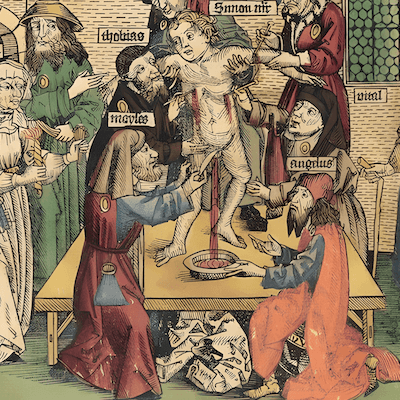
The burden we cannot bear ourselves — projection, shame, and the outsider
Scapegoating means finding the one or ones who can be identified with evil or wrong-doing, blamed for it, and cast out from the community in order to leave the remaining members with a feeling of guiltlessness, atoned with the collective standards of behaviour. It both allocates blame and serves to "inoculate against future misery and failure" by evicting the presumed cause of misfortune.
In Jungian terms, scapegoating is a form of denying the shadow of both man and God. What is seen as unfit to conform with the ego ideal is repressed and denied, or split off and made unconscious. We do not often enough even see that these qualities are part of our psychological make-up. But we are acutely aware of their belonging to others, the scapegoats.
"Those who are identified with the scapegoat feel inferior, rejected and guilty — responsible for more than their personal share of shadow. But both scapegoater and scapegoat feel in control of the mix of goodness and malevolence that belongs to reality itself."
— S. Brinton Perera
The seed that holds the future
Psychologically, the child is an image of both the irrecoverable past and an anticipation of future development. Feelings of alienation or abandonment can constellate the child archetype. The effects are two-fold: the "poor-me" syndrome characteristic of the regressive longing for dependence, and paradoxically, a desperate desire to be free of the past — the positive side of the Divine Child archetype.
The Divine Child represents the self's most vital, creative, and forward-looking energies. It appears in moments of genuine renewal — in the dream of a newborn, in the appearance of a luminous young figure, in the sense that something genuinely new is coming into being in the psyche.
"Thus, the Divine Child, modulated and enriched by life's experiences, becomes the King; the Precocious Child becomes the Magician; the Oedipal Child becomes the Lover; and the Hero becomes the Warrior."
— D. Sharp
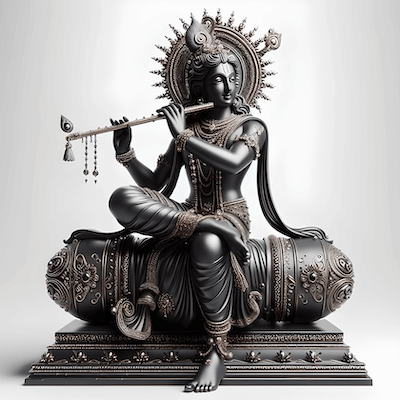
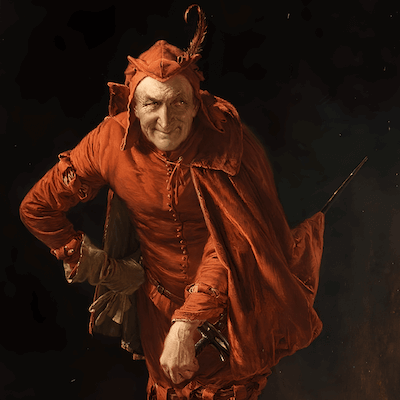
The one who disrupts what has grown too rigid to survive
When Jung first encountered the image of the Trickster, he was reminded of the tradition of carnival with its striking reversal of hierarchic order. He found in the Trickster a striking resemblance to the alchemical figure of Mercurius — with his fondness for sly jokes and malicious pranks, power to change shape, a dual nature (half animal, half divine), and an approximation to the figure of a saviour. An altogether negative hero, the Trickster yet manages to achieve through his stupidity what others fail to achieve by concentrated effort.
The Trickster is both a mythical figure and an inner psychic experience. Wherever and whenever he appears, in spite of his unimpressive exterior, he brings the possibility of transforming the meaningless into the meaningful. He symbolises the propensity for enantiodromia — and his actions inevitably reflect a compensatory relationship to consciousness. Psychologically, Jung saw the Trickster-figure as equivalent to the shadow.
"When the Trickster appears in dreams, in paintings, in synchronistic events, slips of the tongue, in fantasy projections and personal accidents of all kinds, a compensatory energy has been released."
— A. Samuels
The guide between worlds — ego and unconscious, life and death
The ancient mystery cults are always connected with psychopompic deities. Some are equipped with keys to the underworld, for as the guardians of the door they watch over the descent of the initiates into the darkness and are the leaders into the mysteries.
Psychopomp is the figure that guides the soul at times of initiation and transition — a function traditionally ascribed to Hermes in Greek myth, who accompanied the souls of the dead and was able to pass between polarities: death and life, night and day, heaven and earth. In the human world, the priest, shaman, medicine man and doctor are some who have been recognised as fulfilling the need for spiritual guidance.
Jung did not alter the meaning of the word, but he used it to describe the function of the anima and animus in connecting a person with a sense of ultimate purpose, calling or destiny — acting as a go-between connecting ego and unconscious.
"The shadow is the guardian of the threshold, across which the path leads into the nether realm of transformation and renewal. What first appears to the ego as a devil becomes a psychopomp, a guide of the soul."
— E. Neumann
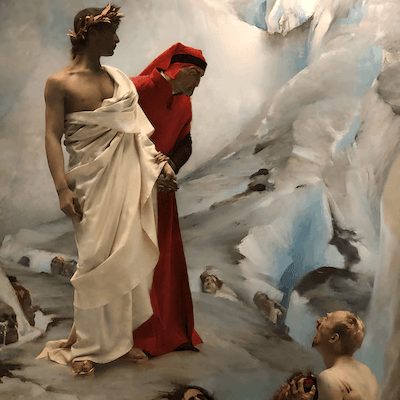
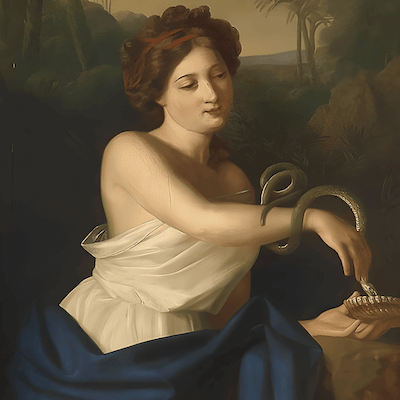
Only the one who has descended into darkness can lead another through it
The classical world saw sickness as the effect of divine action, curable only by a god or another divine action. A clear form of homeopathy — the divine sickness being cast out by the divine remedy (similia similibus curantur) — was practised in the clinics of antiquity. When sickness is vested with such dignity, it has the inestimable advantage that it can be vested with a healing power.
The divina afflictio then contains its own diagnosis, therapy, and prognosis, provided that the right attitude is adopted. This right attitude was made possible by the cult, which simply consisted in leaving the entire art of healing to the divine physician. He was the sickness and the remedy. These two conceptions were identical. Because he was the sickness, he himself was afflicted — and because he was the divine patient, he also knew the way to healing.
"He who wounds also heals — ho trôsas iásetai."
— C.A. Meier
These are not abstractions — they are living forces shaping your dreams, your relationships, and the patterns that recur in your life. Analysis is how we meet them directly.