Jungian Essays
The Hidden Grammar of Your Inner World
Something in us responds to certain stories with an intensity that exceeds what the plot alone can explain. That excess is the signature of an archetype. Through the lens of Jungian depth psychology and the symbolic language of myth, take a closer look at archetypes as inherited structures of the collective unconscious — patterns that do not merely appear in our stories, but actively shape the lives we are living, the wounds we carry, and the wholeness we are moving toward.
2.jpg)
Have you ever found yourself oddly captivated by a fantasy television series — one you might even feel slightly embarrassed to admit you're watching? You begin with mild curiosity, perhaps even skepticism. The stories seem fantastical, the characters familiar to the point of cliché. And yet you keep returning, episode after episode, something pulling at you beneath the surface spectacle of magic and melodrama.
Many of us have had this experience. Serialized fairy-tale dramas have become a remarkable cultural phenomenon, drawing in children, parents, and thoughtful adults alike. Their popularity cannot be explained by production value alone. Something older and more universal is at work. These stories speak to us in the language of archetypes —and it is precisely this ancient grammar of the psyche that Jung spent a lifetime articulating.
In Jungian psychology, an archetype is not merely a character type or a literary device. It is a primordial pattern of behavior and experience, inherited across generations, embedded in the deepest layers of the collective unconscious. Archetypes are not invented by storytellers — they are discovered by them. The Hero, the Orphan, the Shadow, the Trickster, the Great Mother, the Divine Child: these are not metaphors. They are living structures of the psyche, organizing how we experience love, loss, power, betrayal, and transformation.
Jung understood that when a myth or fairy tale grips us, it is because something in us recognizes itself. The story is, in some essential way, our story. This is why the same archetypal motifs appear in cultures separated by vast distances of time and geography — in Celtic mythology, in Greek drama, in Japanese folk tales, in the stories we stream on our screens tonight.

LP · NCPsyA · SCPsyA
Jungian psychoanalyst practicing in New York's West Village. This journal presents original essays on depth psychology, dreams, and the inner life.
.jpg)
Contemporary fantasy storytelling —when it is doing its deepest work — functions in precisely the way that Jungian analysis does: it holds up a mirror to the psyche and asks us to look. We may begin by watching characters we judge as purely good or purely evil. But as a narrative unfolds over time, the psychological complexity of even the most archetypal villain begins to emerge. We learn the backstory. We encounter the childhood wound. We see the precise moment when trauma hardened into cruelty, when vulnerability was buried beneath omnipotence and rage.
This is what I have come to think of as the compassionate arc of storytelling. The writer, like the analyst, does not permit us to remain comfortable in our projections. The "evil" character refuses to stay flat. And in that refusal, something stirs in us — are cognition that the same darkness lives in corners of our own interior life, repressed into what Jung called the Shadow.
Among the most potent archetypes that recur in fairy-tale narratives is that of the Orphan. On its surface, the orphaned child is a figure of abandonment — cut off from origin, from lineage, from the security of belonging. But in Jungian terms, the Orphan carries a far richer symbolic charge. As Edinger notes, the image of the orphan belongs to the alchemical phase of separatio — the painful but necessary process of differentiation, of becoming distinct from the unconscious, undifferentiated state in which we began.
The Orphan complex, as it appears clinically and mythologically, encompasses the martyr-savior, the victim-aggressor, and the fusional complex — often co-present within a single psyche. Positively, this archetype points to latent psychological potentials not yet realized. It gestures toward the Divine Child: the part of us that, despite all wounding, carries the seed of transformation. In Celtic mythology, there is a resonant image of the swan maiden — a figure who, upon breaking from her human marriage, sometimes takes her children with her and sometimes leaves them orphaned at the threshold of two worlds. That image of the child left between worlds, belonging fully to neither, is an archetypal condition that many of us know intimately, whether or not we would name it as such.
Most "evil" characters in myth and modern fantasy are deeply orphaned in this psychological sense. Cutoff from love in their formative years, they compensate through power, control, and the suppression of vulnerability. They exhibit what we might clinically recognize as narcissistic personality organization — not as a judgment, but as a description of a psyche that has armored itself against its own pain. The Shadow — the repository of everything rejected, denied, and hidden about the self — grows vast and ungoverned in such a person. And the tragedy is that this armoring, while protective, simultaneously severs them from their own humanity.
When we sit with a story long enough to witness a character's full psychological arc — from wounding to hardening to, perhaps, the first tentative crack of thawing — we are not merely being entertained. We are doing something that resembles the work of psychoanalysis. We are extending compassionate attention to a suffering psyche. We are allowing ourselves to feel what that character feels, to mourn what they have lost, to recognize in their darkness some echo of our own unlived grief.
This is not accidental. It is precisely what the archetype is designed to do. Jung understood that archetypes carry an numinous quality — a charge of emotional intensity that exceeds what the literal story warrants. When a scene in a fairy tale moves us to tears or fills us with inexplicable dread, we are responding not to the plot but to the archetypal layer beneath it. The psyche is speaking to itself in its own language.
The process of individuation —Jung's term for the lifelong journey toward wholeness — requires precisely this kind of witnessing. It asks us to bring into conscious awareness the archetypal patterns governing our behavior, to integrate the Shadow rather than project it onto others, to reclaim the parts of ourselves we have abandoned or been forced to abandon. Fairy tales, at their most potent, offer us a contained and symbolic space in which to practice this work — to "re-member," as it were, what we have forgotten about ourselves.
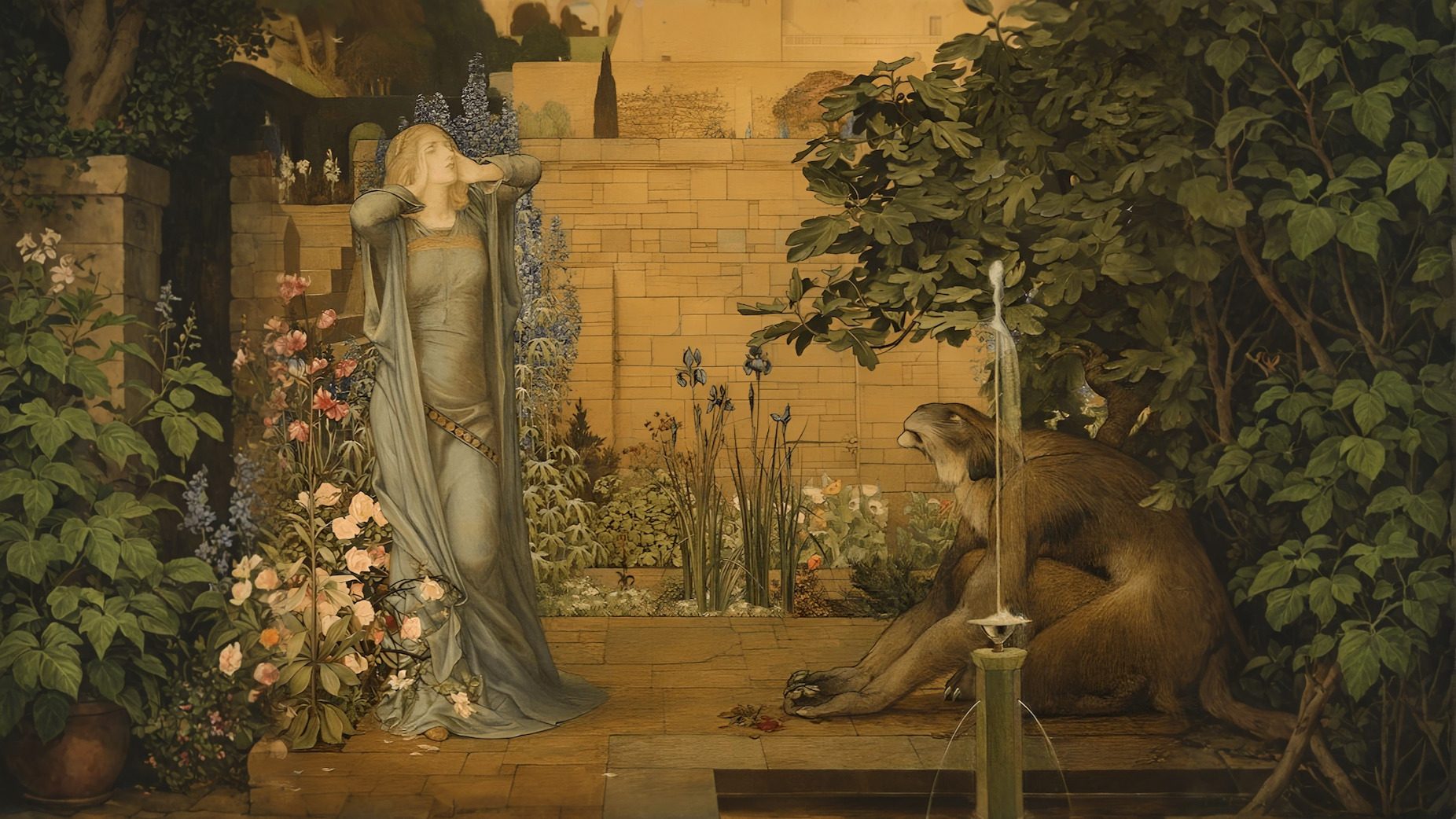
I have found a striking parallel between the experience of being deeply engaged by serialized fantasy storytelling and the experience of sitting with a client in the consulting room. In both cases, we begin with a presented persona — a surface identity that is legible and seemingly stable. Over time, as trust deepens and the story unfolds, the layers beneath become visible. The defenses soften. The wound shows itself. And in that moment of revelation, something transformative becomes possible.
The viewer who finds themselves unexpectedly moved by the backstory of a character they had previously dismissed as simply "evil" is, in that moment, doing the work of the psyche. They are expanding their capacity for compassion — and in doing so, almost invariably, they are also expanding their relationship with their own interior life. The vault where the queen keeps the hearts of her victims is the same vault in which we have stored our own disowned feelings. The story shows us the door. Depth psychology asks us to walk through it.
This is the invitation of archetypes: not to explain ourselves away, but to recognize ourselves more fully. The fairy tale is not a regression to childhood fantasy. It is, at its best, a sophisticated technology of the soul — ancient, reliable, and as urgently needed now as it has ever been.
LP · NCPsyA · SCPsyA
Jungian psychoanalyst practicing in New York's West Village. This journal presents original essays on depth psychology, dreams, and the inner life.
These images are not mere metaphors. They are lived experiences. Analysis is how you learn to navigate them.
Schedule a free initial consultation. There is no commitment — only the opportunity to explore whether depth work is right for you.