Jungian Essays
On Rigidity, the Unconscious, and the Night Sea Journey
What happens when years of rigid control meet the compensatory force of the unconscious — and why the river always finds a way through.
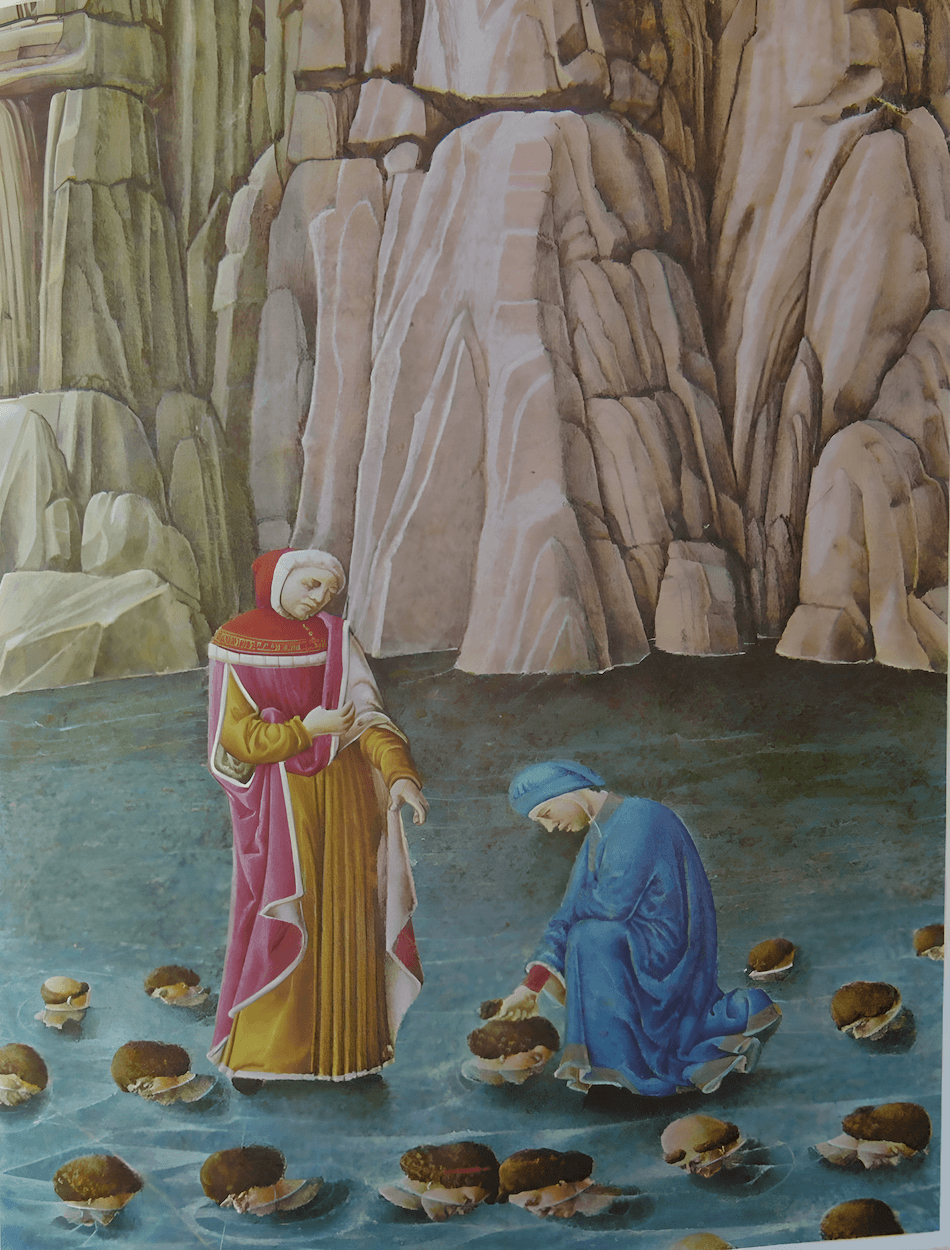
There is a particular kind of person who manages their life with extraordinary precision.
They are not, by any external measure, struggling. Their calendar is organized. Their commitments are met. Their professional life moves along a carefully maintained track. They have learned —often through long experience — that structure works. That predictability is a form of safety. That control, applied consistently, keeps the worst outcomes at bay.
And it does. For a long time, it genuinely does.
What brings them to my office is rarely a crisis of structure. It is something more like a creeping sense that something essential has been mislaid — that the very qualities that made them effective in the world have begun to cost them something they cannot quite name. They are competent. They are respected. They are, by every visible measure, holding it together.
"I just feel like I've been running on empty for years,'" one patient told me. "And I don't even know what would fill it.'"
Another: "I keep waiting to feel something. And then I feel guilty that I don't."
What they have built is a life organized around the management of feeling — not the absence of feeling, but its careful deferral. The difficult conversation is postponed. The grief is moved around rather than through. The desire is organised into silence because there is no convenient place for it in a life this tightly structured. I'll deal with it later, they tell themselves. I Right now I need to stay focused.
The psyche does not wait.

LP · NCPsyA · SCPsyA
Jungian psychoanalyst practicing in New York's West Village. This journal presents original essays on depth psychology, dreams, and the inner life.
In Jungian psychology, when the psyche wishes to communicate something that cannot be said in words, it reaches for images. And one of the oldest, most persistent images in the unconscious life of human beings is water.
Water is not a simple symbol. It has never been. Across cultures, across centuries, across the entire archive of human mythological imagination, water appears as what the scholar Hans Biedermann calls a bivalent symbol — carrying within itself both the possibility of life and the possibility of death, both fertility and destruction, both the gift and the flood.
Herodotus wrote that "Egypt is the gift of the Nile" — meaning that the entire civilization of Egypt, its agriculture, its abundance, its very existence, was made possible by a river. Civilizations are born along riverbanks because water moves, carries, renews. It is the original symbol of creative force, of fecundity, of direction. The river flows, and along its banks, life becomes possible.
But water also drowns. The same river that brings the spring flood to fertilize the fields can, in excess, destroy the men entirely. The four rivers of Paradise and the four rivers of Hell are, mythologically speaking, the same waters. One set flows toward life; the other, toward oblivion. What determines the difference is not the nature of the water but the nature of the relationship.
Biedermann notes that in many traditions, dragon-kings — symbols of the dangers of flooding and rapid current — were believed to dwell in rivers, awaiting those who had not learned to navigate the waters. The drowned, in these mythologies, were not simply victims of accident. They had failed to learn the river. They had avoided it, or underestimated it,or met it unprepared.
The river does not forgive unpreparedness. It simply flows.
In Jungian psychology, when the psyche wishes to communicate something that cannot be said in words, it reaches for images. And one of the oldest, most persistent images in the unconscious life of human beings is water.
Water is not a simple symbol. It has never been. Across cultures, across centuries, across the entire archive of human mythological imagination, water appears as what the scholar Hans Biedermann calls a bivalent symbol — carrying within itself both the possibility of life and the possibility of death, both fertility and destruction, both the gift and the flood.
Herodotus wrote that "Egypt is the gift of the Nile" — meaning that the entire civilization of Egypt, its agriculture, its abundance, its very existence, was made possible by a river. Civilizations are born along riverbanks because water moves, carries, renews. It is the original symbol of creative force, of fecundity, of direction. The river flows, and along its banks, life becomes possible.
But water also drowns. The same river that brings the spring flood to fertilize the fields can, in excess, destroy the men entirely. The four rivers of Paradise and the four rivers of Hell are, mythologically speaking, the same waters. One set flows toward life; the other, toward oblivion. What determines the difference is not the nature of the water but the nature of the relationship.
Biedermann notes that in many traditions, dragon-kings — symbols of the dangers of flooding and rapid current — were believed to dwell in rivers, awaiting those who had not learned to navigate the waters. The drowned, in these mythologies, were not simply victims of accident. They had failed to learn the river. They had avoided it, or underestimated it,or met it unprepared.
The river does not forgive unpreparedness.It simply flows.
There is a concept in Jungian depth psychology that I return to often in my clinical work, because it names something my patients frequently arrive at without having language for it.
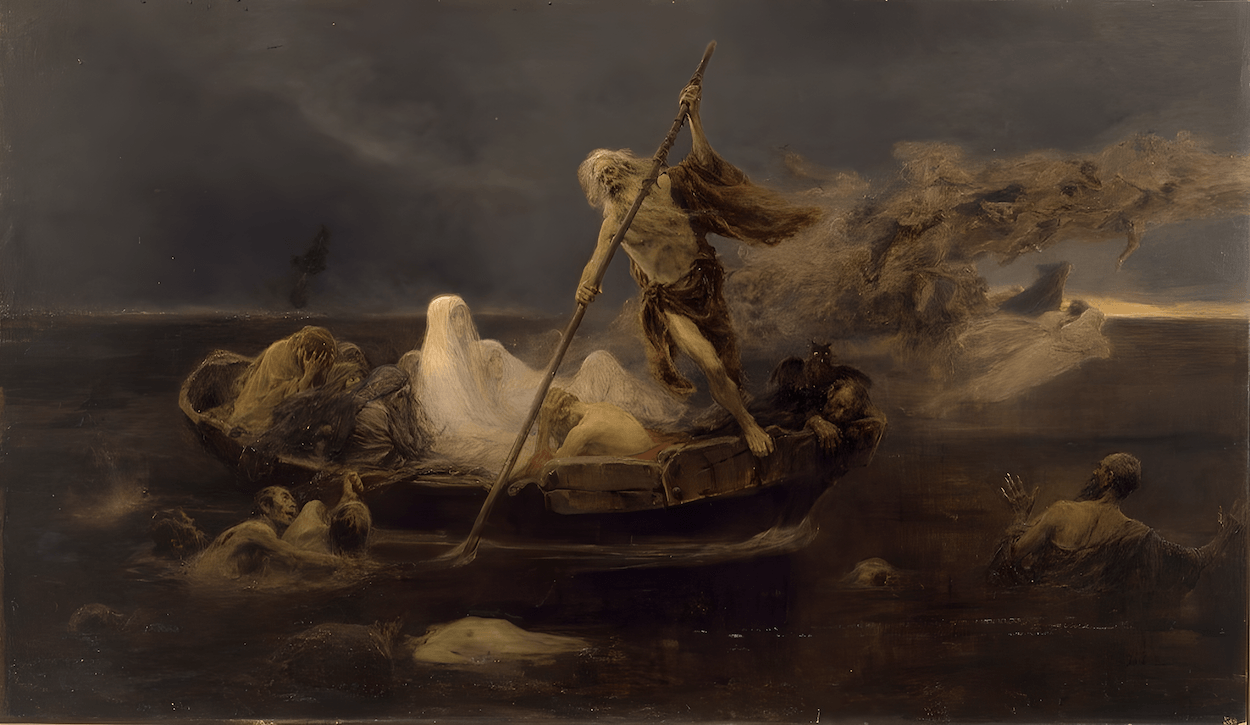
Jung called it the night sea journey — nachtmeerfahrt in German — borrowing the image from ancient mythology and comparative religion. It is the journey into the deep waters of the unconscious: the descent that every person must eventually make if they are to become themselves fully. Not a journey they choose, necessarily. Often, a journey they are thrown into, by the very flood they spent years trying to prevent.
The boundary between the living and the dead, in Greek mythology, is not a wall or a gate. It is a river. The Styx —dark, slow, and absolute — forms the threshold of the Underworld, the realm of Hades. There is no way around it. The crossing must be made. What determines whether you survive the crossing is not whether the river exists, but whether you are prepared to enter it.
In the Epic of Gilgameš, the ancient Mesopotamian hero must cross the waters of death to reach the one man who holds the secret of immortality. His guide across those waters is the ferryman Sursunabu — the figure who knows the crossing, who has made it before, who holds the knowledge of how to navigate what cannot be navigated alone. Gilgameš does not cross unaided. No one does.
Jonah in the belly of the whale. Osiris in the waters of the Nile. The hero descends into the deep, and if the descent is survived, something new becomes possible on the other side.
What makes the descent survivable is not the absence of fear. It is the capacity to swim — or at the very least, to know the water. To have spent some time learning the river: its currents, its rhythms,its particular dangers. Someone who has never learned to tolerate ambiguity, to sit with unresolved feeling, to let the current move them without immediately redirecting it — that person meets the flood without any skill for navigating it.
The night sea journey finds everyone eventually. The question is only whether you arrive at it having spent some time near the water — or whether you arrive having spent years on the shore, insisting the river stay where you put it.
I want to be careful not to romanticize dissolution, or to suggest that structure is the enemy. It is not. The capacity to organize, to plan, to build coherent structures around one's life is a genuine human achievement, and it deserves respect.
What I am pointing to is something more precise: the difference between the structure that serves life and the structure that has replaced it. Between a riverbank — which gives the water direction and makes it navigable — and a dam, which stops the water from moving at all.
Rivers are curved on purpose. The bends slow the current, aerate the water, and create the conditions for life along the banks. A river that has been straightened — engineered into pure efficiency — loses something essential. It moves faster. It erodes more. It floods more catastrophically when it does.
The inner life works the same way. Some of the most important movements in a person's psychological life are not efficient. They are curved. They take unexpected turns. They require sitting with what cannot be immediately resolved.
The work of depth psychology is partly the work of learning to be a swimmer rather than a dam-builder — to develop a relationship with the waters of the unconscious that is neither avoidance nor submersion, but genuine navigation.
That is not a quick process. But it begins with a willingness to acknowledge that the river is there — that it has always been there — and that the question is not whether to enter the water.
The question is whether you are ready to begin your night sea journey.
LP · NCPsyA · SCPsyA
Jungian psychoanalyst practicing in New York's West Village. This journal presents original essays on depth psychology, dreams, and the inner life.
These images are not mere metaphors. They are lived experiences. Analysis is how you learn to navigate them.
Schedule a free initial consultation. There is no commitment — only the opportunity to explore whether depth work is right for you.