Jungian Essays
On the Desert Fathers, the alchemical darkness, and why we are all running from the vigil with ourselves.
Modern life has made distraction seamless and solitude almost impossible to justify — yet the avoidance runs deeper than busyness. Drawing on Jungian psychology, alchemical symbolism, and the radical asceticism of the early Christian desert tradition, this essay explores what solitude actually demands of us: not rest, not quiet, but a willingness to undergo the inner death that every genuine transformation requires.
.png)
The modern age seems to have a problem with solitude. We are constantly distracted and bombarded by technological innovations, apps, and gadgets that entice and preoccupy our minds. And yet the modern person—or I should say, the modern patient—has become increasingly aware of their own addiction to this plethora of things.
People often complain of losing hours to mindless scrolling—surrendering to what they call the rabbit hole, feeding what neuroscience has dubbed the lizard brain, and emerging from the stupor with little to show but guilt. This complaint has become one of the most recurring themes in the analytic space today. There is an implicit assumption alongside it: that if one understands one's own neurosis, or some low-level addiction, one can simply exercise willpower and resist the pull.
Some very creative and disciplined people—those who can organize their lives and remain productive—have surprisingly little awareness of how they spend their after-hours. They often claim to be too tired to engage with something meaningful: a serious book, a conversation of depth, or, as I sometimes suggest, simply doing nothing.
Doing nothing, when explored in analysis, frequently evokes an extreme fear. People call it anxiety, but beneath it lies something older—a fear that stillness will unravel into something destructive for their life and survival.
With this in mind, let us turn to the past and consider how the people of antiquity dealt with solitude. What we find there is striking: solitude was often regarded as a special endeavor, even a sacred one. People were busy then as now—consumed by practical concerns, by survival, by the rhythms of daily life. Whether in the past, with its scarcity of resources, or in the present, with its overwhelming abundance, solitude has remained in deficit. It is longed for, complained about, and—continually avoided.
Solitude in its rawest form is perhaps best exemplified in the lives of the Desert Fathers—those monastic ascetics of early Christianity who chose to live between the sands, whether we understand those as the sands under the burning sun or the sands of time. Among them were figures such as St. Anthony the Great, who retreated into the Egyptian desert for decades of solitary combat with his own inner demons; St. Paul of Thebes, considered the first Christian hermit; and Abba Moses, whose sayings on stillness and interior silence have endured for seventeen centuries. That kind of monastic life was among the harshest imaginable, requiring profound loneliness, separation, and isolation.
How is it that solitude was so difficult then—and remains so difficult now? I am not suggesting we compare the modern person with an ancient saint in terms of lived experience. Rather, I want to understand what it is about solitude that seems to require extremes in order to bring about spiritual awakening. That, in fact, is precisely why we are all running from it.

LP · NCPsyA · SCPsyA
Jungian psychoanalyst practicing in New York's West Village. This journal presents original essays on depth psychology, dreams, and the inner life.
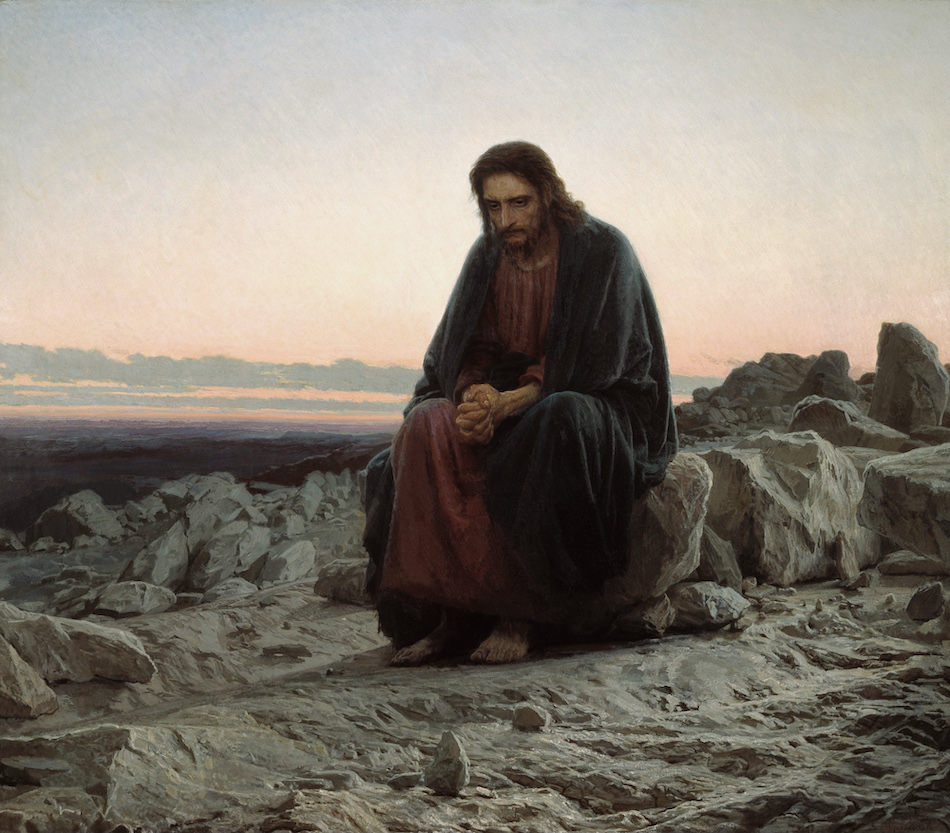
Solitude is the beginning of something both promising and fraught with hardship—a difficult path of purification. The rejection of worldliness is certainly no easier today than it once was. Jung himself observed that loneliness is the prerequisite of individuation. This kind of solitary activity is of absolute importance to every person: it allows one to go within and explore the inner infrastructure of one's thoughts, deeds, and feelings.
We run from solitude because it is an emissary from the desert—a messenger that arrives uninvited, bearing the blazing sun that leaves nothing unlit, and the temptations the devil sends in the form of mirages and delusions. To go inward and find solitude within one's own mind, to enter your inner wasteland, is not simply a question of time or availability. It is a question of readiness to undertake a journey that is genuinely challenging, though deeply rewarding.
We might even feel a certain gratitude toward contemporary life for structuring things so conveniently—distracting us from the world within, from the true hero's journey that awaits. Not the outer journey of attainments, deeds, and material victories, but the inner one: the lonely quest where demons and dragons are faced within the insular world of one's heart.
We tend to think of solitude in binary terms. Yes, it can represent stillness, peace, and tranquility—something akin to a lonely vigil. In that sense, solitude can be experienced as a genuine blessing. Yet solitude carries within it a darker current—an expansion that draws us not only toward peace but inevitably toward what the alchemical tradition calls nigredo, or putrefactio: a period of deep depression, darkening, and decay that forms an essential part of the transmutational process.
So when we flee into busyness, into the numbness of technological oblivion, we are not simply being consumed by the very things we consume. On a deeper level, we are running from what we truly fear: the vigil with oneself, the inner mystical initiation, the opportunity for awakening and truth.
It is worth pausing here to recall that even Jung—the great cartographer of the interior—was not spared this ordeal. In his notebooks, he wrote:
"I think of Christianity in the desert. Physically, those ancients went into the desert. Did they also enter into the desert of their own self? Or was their self not as barren and desolate as mine? There they wrestled with the devil. I wrestle with waiting. It seems to me not less since it is truly a hot hell."
The confession is remarkable for its honesty. If the man who gave us the language of individuation found his own inner desert a hot hell, what are the rest of us to expect? And yet he did not turn back. Neither, ultimately, can we.
As Mircea Eliade pointed out, the life of modern man is not so different in its dynamics from life in so-called primitive societies, where a novice is initiated into adulthood through harsh and dramatic rites of passage. For modern human beings, whose lives are filled with spiritual crises, it remains a natural fact that "every human life is made up of series of ordeals, "deaths', and "resurrections"". The inner emptiness and lack of meaning that so many people carry can only be addressed through this quest—through what Eliade calls a resurrection attainable only on such a journey.
Every resurrection, every rebirth, is preceded by an inner death. This is not merely a psychological metaphor—it mirrors a pattern woven into the fabric of existence itself. Across mythologies and cosmologies the world over, creation begins with dissolution: chaos before order, darkness before light, the void before the word. The grain must rot in the earth before it rises as wheat. The sun must descend below the horizon before it can be born again at dawn. What the alchemists encoded in their imagery of nigredo and putrefactio, what the mystics described as the dark night of the soul, and what depth psychology recognizes as the necessary disintegration that precedes integration—all of these are echoes of the same primordial truth. The self that emerges from genuine solitude is not the self that entered it. Something must die in the crossing.
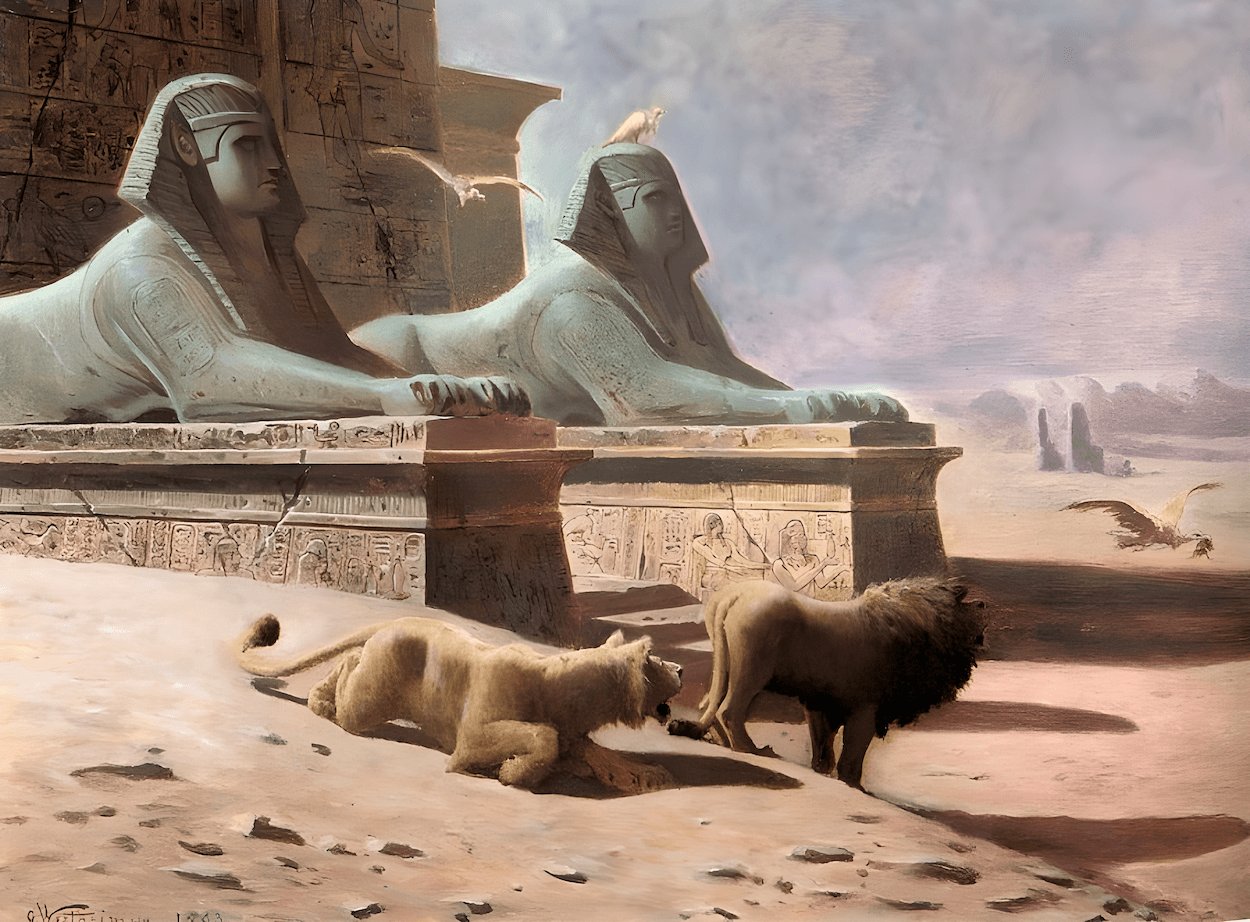
As Carotenuto observed, "every analyst must be aware that [he] is leading the patient toward an irreversible solitude, since those who have tasted the fruit of the tree of good and evil generally do not turn back." To be alone, to be solitary, to be present with one's own being—this is unlike any other relationship we have ever experienced.
The psychoanalytic tradition holds that the relationship between analyst and patient—though truly intersubjective and relational—retains in certain phases the possibility of an experience of essential solitude. In a sense, therapy becomes the place where "solitude in the presence of the analyst" constellates and lays the foundation for a person's capacity to meet solitude on their own.
It is no wonder that for many people, this experience becomes a religious link to the universe, because it genuinely has the capacity to connect us to something greater. As Edward Edinger noted: "On the other side of the Red Sea the Israelites encountered the wilderness, and later, the revelations of Yahweh on Sinai. Thus, on first encounter with the Self, one experiences a certain loneliness and separation from others."
Spiritual transmutation cannot be indefinitely deferred. The inner desert will wait—but it will not wait forever. At some point, the emissary returns, and the invitation becomes a summons. What we choose to do with that summons is, perhaps, the most consequential decision of an interior life.
LP · NCPsyA · SCPsyA
Jungian psychoanalyst practicing in New York's West Village. This journal presents original essays on depth psychology, dreams, and the inner life.
These images are not mere metaphors. They are lived experiences. Analysis is how you learn to navigate them.
Schedule a free initial consultation. There is no commitment — only the opportunity to explore whether depth work is right for you.