Jungian Essays
On temenos, liminality, and the protective boundary that becomes the enclosure of the psyche's most perilous transformation.
The temenos, the sacred precinct Jung offered analysis as its image of containment, is craved as a refuge from the profane world beyond its walls. Drawing on Cirlot, Hillman, Bassil-Morozow, van Gennep and Turner, Ann Bedford Ulanov, and Stein's work on liminality, this essay reads the protective boundary as the very thing that seals the danger inside, where the Self begins its own transformation.
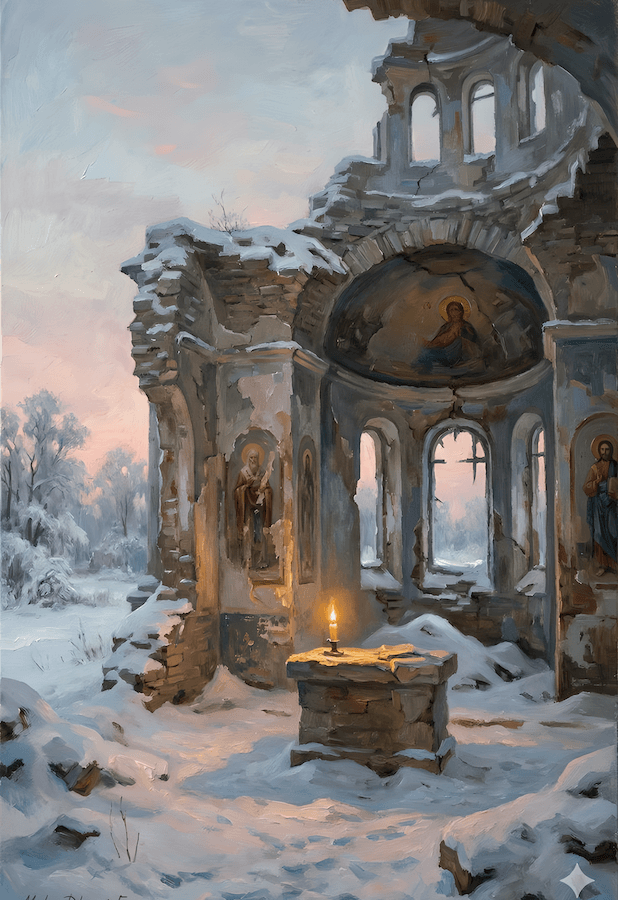
One of the strongest needs of the modern person seeking therapy or analysis is the search for a safe place, a theme that has been the subject of numerous books and articles. Various psychoanalytic tradition developed their own language, employing distinctive words and metaphors to more accurately portray and define the functions of such a space. The widespread term containment became synonymous with both the physical space in which therapy takes place and the psychological function it serves. Jung, intensely aware of both his own psychological processes and those of his patients, also understood the significance of analytic containment. Yet the concept he offered—temenos—originated in antiquity and was consequently elaborated with remarkable symbolic and psychological richness. The word has ancient origins, deriving from the Greek verb τέμνω (temnō), meaning “to cut.” Temenos is widely used in anthropological and religious discourse to refer to a "sacred precinct," especially a holy place, church, or site of worship.
Reflecting the spiritual dimension of psychic processes, the word temenos occupies a natural place within Jungian taxonomy. Indeed, in his detailed discussion of the inner workings of symbols, Cirlot connects the Romanesque cloister with the concepts of the soul and the center of personality. He further situates temenos among images of the garden, fountain, square, and mandala, thereby confirming its alchemical affinity with the soul. Finally, Cirlot articulates Jung’s central claim that “the central area [is] a representation of the Selbst (The Self) or individuality.”
It is telling that analytical psychology saw a sanctuary in what is otherwise known as 'containment'. Why? In my view, Sedgwick provides an answer that precisely captures the inner processes: "Psychotherapy is not church, but it does have to do with suffering, healing, and with a serious contemplation of the deepest things in a person." This view keeps in sight something that can easily be overlooked amid “interventions,” the latest scientific research on brain functioning, and modern approaches to trauma, particularly that the analytic space is one of intentional suffering and should be approached with thoughtful human reverence.

LP · NCPsyA · SCPsyA
Jungian psychoanalyst practicing in New York's West Village. This journal presents original essays on depth psychology, dreams, and the inner life.
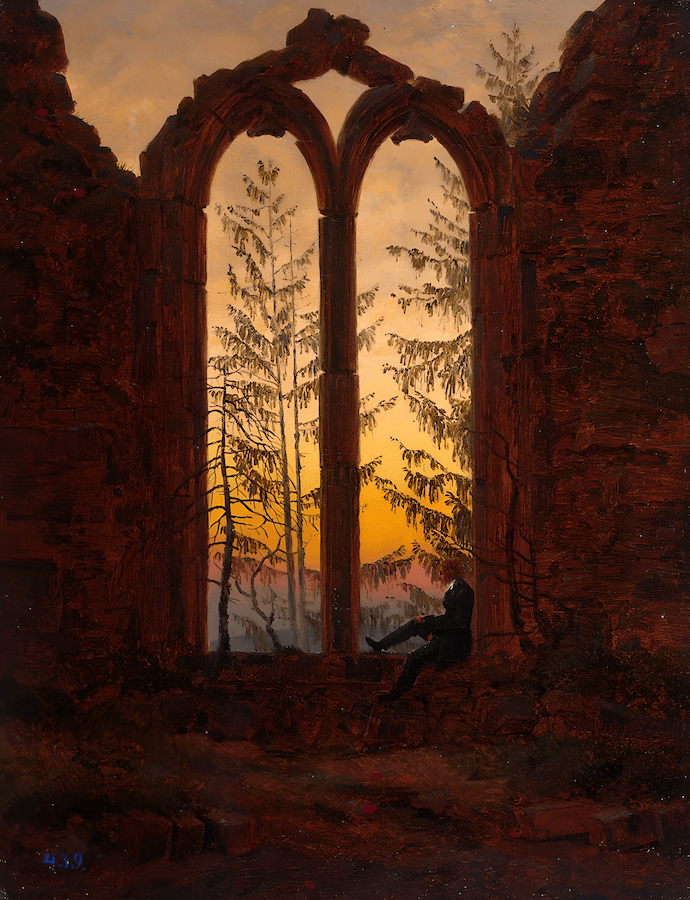
A medical doctor by training, Jung nonetheless had an intuitive grasp of what anthropology has been revealing alongside analytical psychology: the need for sacred space is fundamental to human life. When projected onto physical spaces such as private dwellings or places of worship, or social settings defined by rites of passage, this desire supports a range of psychic objectives.
Primarily, the most immediate impulse is to protect oneself from profane, polluted, and dark energies. This results in the demarcation of a space, often circular or square, from the surrounding area. Drawing on the symbols of the mandala and the magic circle, Jung emphasizes the protective function of delineation, which serves “to prevent an ‘outflowing’ or to guard by apotropaic means against distracting outside influences.”
A similar psychic process unfolds within the therapeutic setting, and in the modern age, it becomes all the more pressing, as traditional religious spaces have lost their appeal for many. The need to “cut off” the temenos from the rest of the world is mirrored by the psyche in analysis, where the patient enters the “‘sacred precinct’ of the analytical container” (Dunlea). More specifically, the temenos functions as the “protection of a given space, identified with the Self” (Cirlot), underscoring the necessary boundary between the outer profane world and the inner sacred one.
However, there is another, less obvious function of the temenos that is easy to overlook, since it paradoxically stands in opposition to safety itself.
On the one hand, the "hermetically sealed vessel" must be safeguarded against external elements and pollution, as both can bring danger and suffering. This means that the analytic enclosure constitutes a psychic vessel that “should be particularly guarded and controlled lest it become a vortex of uncontrollable experiences” (Bassil-Morozow).
On the other hand, the enclosure of the temenos may give rise to a different and more profound danger: the process of inner transmutation. In this sense, therapy becomes a transformative setting, where both analyst and patient “feel themselves to be in the presence of a potentially overwhelming unconscious and daemonic force" (Samuel).
James Hillman draws out a more sinister undertone in the psyche’s need to protect itself, interpreting the temenos’s roundness as “protection for our paranoid tendencies.” On closer examination, the psyche, upon entering the “sacred precinct,” confronts a paradoxical situation: it “keeps at bay the very underworld that it presents” (Hillman). The danger rises from the center, from the Self, so our instinct for protection is partly a defense against what lies within us.
Camille Paglia, a professor of art, compared art to temenos: “Whatever enters this space is transformed.” Extending this to depth psychology, whatever enters the protected sanctum of our inner work will be transformed. Which brings us to the next realization: safety is an illusion. What lies hidden from our naive gaze is the treacherous energy released in transformation.
At last, temenos. We have crossed into the church of our souls, a space of peace and quiet. We shut our eyes to sift away the images of everyday existence and open our hearts to the resonances of the divine. We have long awaited this moment… Yet, what emerges? Dark thoughts seep in. Long-buried pain returns. Unbearable feelings rise like a tidal wave, threatening to destroy the sanctuary of peace we had longed for. This is the advent of nigredo.
I sometimes hear people speak of meditation with that same hopeful intention. They expect the practice will soothe their nerves and quiet their minds, yet find themselves faltering when, quite unexpectedly, the reverse happens, leading them to believe they are meditating in the “wrong” way. What takes place is, in fact, a natural process unfolding within the frame of meditatio: the alchemical phase of darkness and depression known as nigredo.
Through alchemical language, depth psychology describes what modern anthropology terms rites of transition. Originating in the early twentieth century with Arnold van Gennep, this theory presents a tripartite structure of rites of passage, represented by separation, liminality, and reaggregation. This anthropological formulation appears to correspond to the psyche’s process of individuation, which Ann Bedford Ulanov aptly describes as “a process that takes place in that liminal space between conscious and unconscious.”
The parallels between liminality in rites of passage and individuation are striking. As in ritual transition, when “the inhabitants are ‘betwixt and between’ normal social status” (Birx), so too in the liminal phase of the psychological domain do patients “fall betwixt-and-between statuses and identities” (Stein).
According to Victor Turner, who later expanded van Gennep’s theory, liminality can refer to “any condition outside or on the peripheries of everyday life”. This idea is sharply echoed by Murray Stein's observation:
"A full discussion of liminality must also see it synchronically, as a permanent dimension or depth of the psyche, a 'layer' that threads through all time and occupies a space in every period of life. At a certain psychological level of things, we are always in liminality, floating and unfixed to identifications, betwixt and between."
Whether experienced as a discrete transitional phase or as small shifts in everyday living, liminality subjects us to a whole range of the ‘slings and arrows’ of psychological upheaval — ambiguity, social limbo, chaos, depression, a diminished sense of identity, dramatic reversals, inversion, and even humor. The sheer number of unpredictable elements points to the deeper archetypal presence underlying this process. The Trickster archetype is unleashed.
Just as the neophyte is “relieved of his social identity by making a transition from the natural man to the civilized man” (Henderson), so the person moving through the liminal phase is “reduced to a subordinate or fluid state” (Birx). But this time, the subordination is to the greater principle that governs the psyche: the Self.
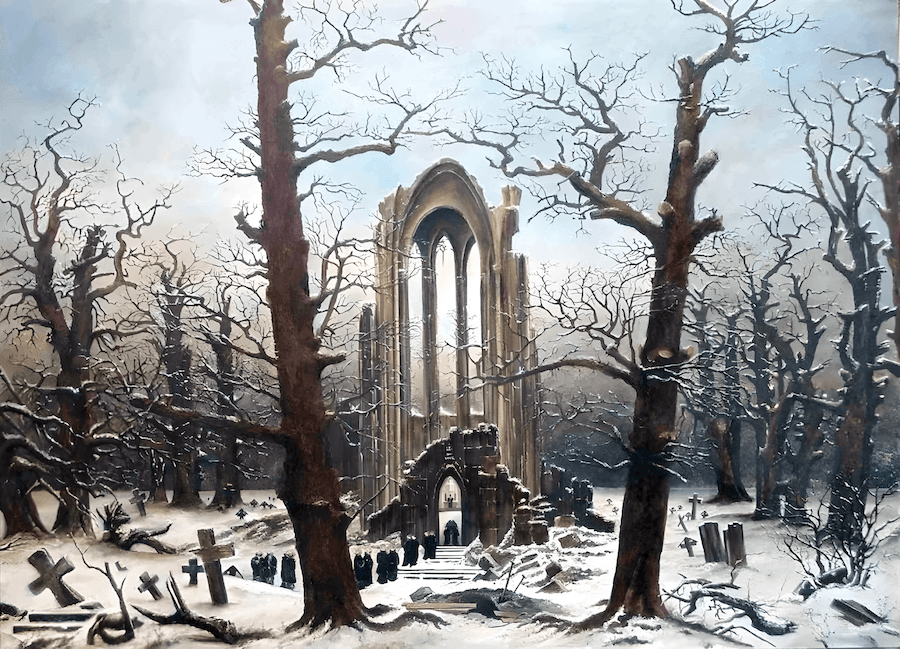
When one examines medieval alchemical illuminations, one cannot help but be struck by the density of death imagery: tombs, graveyards, corpses, limbs. However, the initial shock and confusion, or even the visceral squeamishness, can, once assimilated, yield to the deeper meaning of these dramatic descriptors of the alchemical nigredo. In his research on the liminal phase of rites, Turner identified the same haunting imagery, “drawn from the biology of death, decomposition, catabolism,” that accompanies liminal personae during their transitional phase. At the heart of this dark psychic cloud of images is the symbol of burial, along with the processes it implies.
The Greek god Hermes presides over liminality. As an archetypal psychopomp and ultimate trickster, he leads unsuspecting souls through crossroads of upheaval, traverses the boundaries between psychological realms with them, and then delivers them straight into the hands of Hades, god of the Underworld. Finally, we enter the liminality of nigredo, a dreadful realm in which “alienation, marginality, and drift” reign (Stein). It is a long and dark passage through the graveyard of one’s own life.
Edmonds describes the psychic journey to the Underworld as "the death of the old self and rebirth into the new mature personality". The question, then, is what part of the old self must die for new psychic life to emerge. Stein is very clear on this point — the persona must die:
“From an intrapsychic point of view, what needs to be separated from in the first phase of the midlife transition is an earlier identity, the persona. The ego needs to let go of this attachment before it can float through the necessary period of liminality that is preliminary to a deeper discovery of the Self. To do this thoroughly and decisively, the person needs to "find the corpse" and then to bury it: to identify the source of pain and then to put the past to rest by grieving, mourning, and burying it.”
At this stage, the persona embodies outdated forms of thinking, feeling, and behaving that appear, on the surface, to align with a particular social standing and role, but are merely a petrified defense, hardened into a mask. We often cling desperately to our personas, those façades we present to the world and mistake for our true selves. Stein describes the attempts to preserve one’s persona as “propping up” the corpse. However, at some point, which for most of us arrives in the form of an archetypal midlife crisis, this strategy “is no longer adaptive, and a certain psychological ‘stench’ can be detected in this person’s increasingly rigid, outmoded, and anxious behavior” (Stein). This is a sure path to becoming stranded in the land of the dead, unable to find peace in either world.
Yet, as we traverse the boundaries of the inner realms and enter the center of our being, the duality of life and death reveals itself. In Egyptian mythology, new sprouts emerges from the corpse of the dead Osiris, god of the Underworld. In analytic space, what has for some time been the graveyard now has the chance to become the garden. The neophyte in the rite of passage, just as the analysand within the psychoanalytic alembic, stands for both the corpse and the embryo. As Stein says, “Liminality is a womb after it is a tomb.” There is no escaping it. These images converge and intertwine, bringing us pain but also hope and new beginnings.
What those beginnings are is ours to discover.
LP · NCPsyA · SCPsyA
Jungian psychoanalyst practicing in New York's West Village. This journal presents original essays on depth psychology, dreams, and the inner life.
These images are not mere metaphors. They are lived experiences. Analysis is how you learn to navigate them.
Schedule a free initial consultation. There is no commitment — only the opportunity to explore whether depth work is right for you.